For the last two years, AI models have become dramatically more capable. They can reason longer, write production-ready code, operate computers, use browsers, and produce professional work across science, finance, mathematics, physics, and engineering.
But one part of the experience hasnʼt changed: waiting.
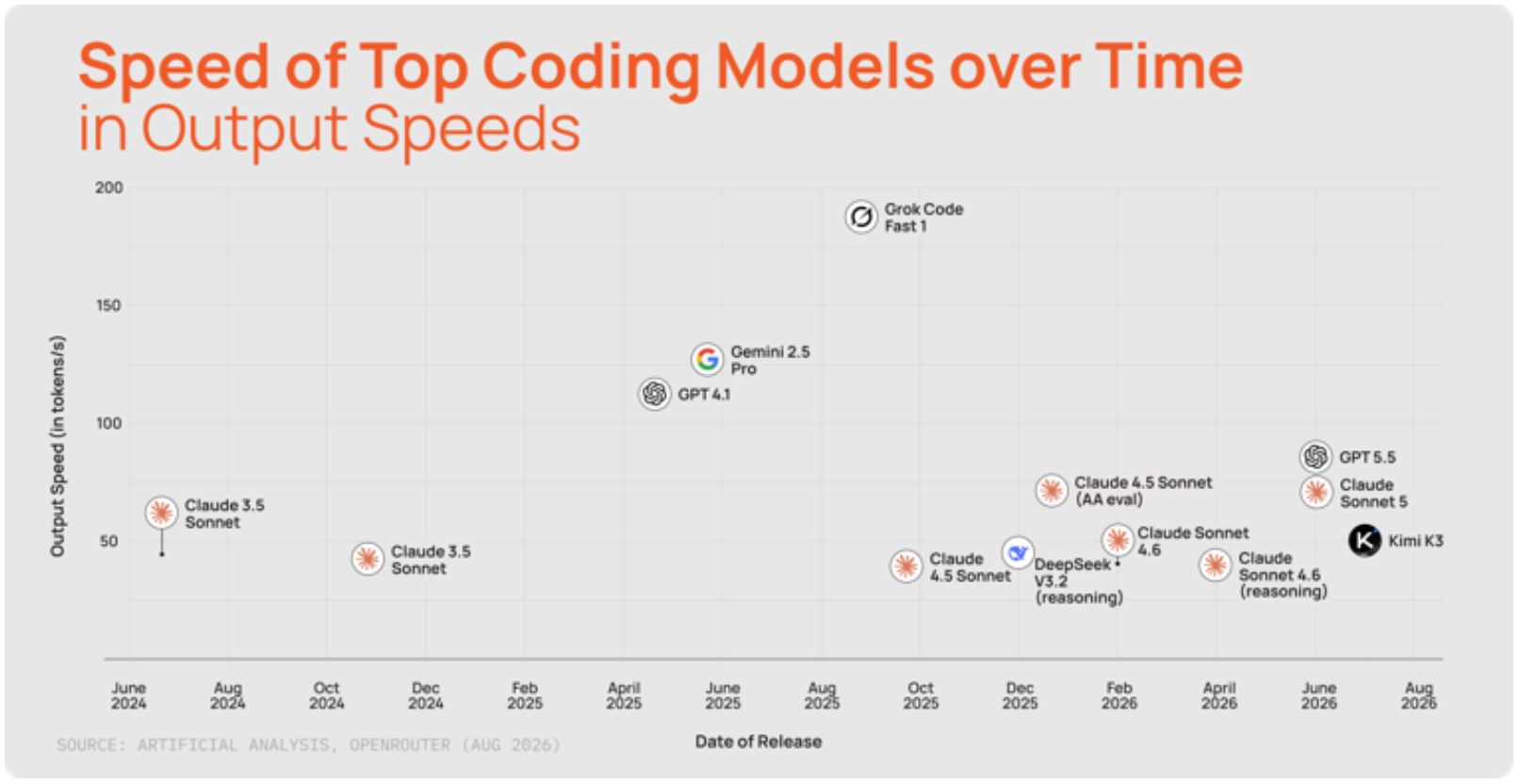
OpenAI is previewing a new Ultrafast mode for GPT‑5.6 Sol running on Cerebras, at up to 750 output tokens per second. This speed changes how we use AI:we can now stay in the flow, and collaborate with the agent in realtime.
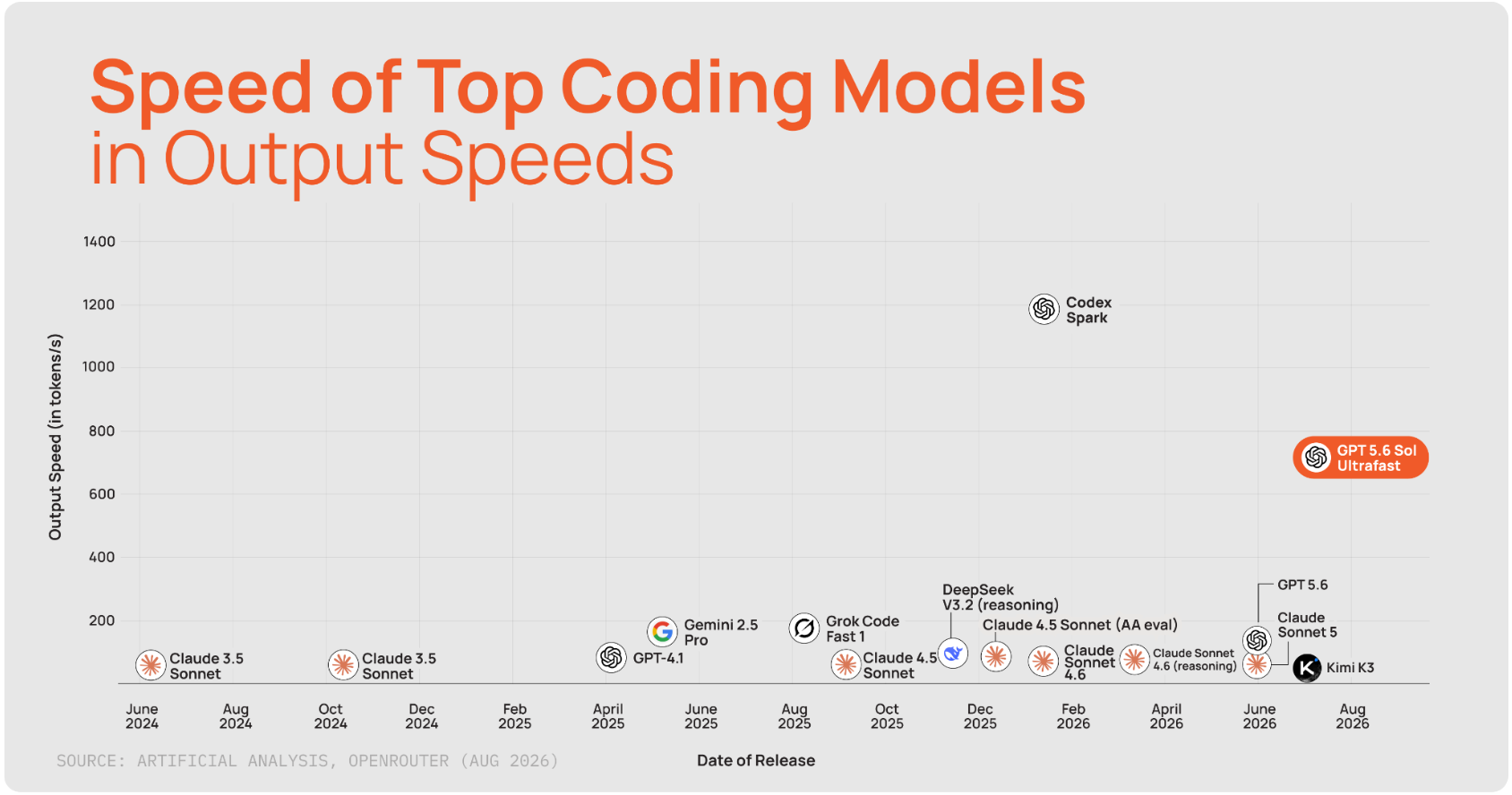
The most important detail is what we did not change.
GPT‑5.6 Sol on Cerebras is not a smaller model, distilled, or quantized to lower precision. It uses the same model architecture, weights, precision, context configuration, and reasoning settings as GPT-5.6 Sol on the standard OpenAI endpoint. It retains the capabilities in browser-use, computer-use, and coding capabilities that people already love GPT-5.6-Sol for.
The only difference is the hardware the model is running on; instead of GPUs, we serve Sol-Ultrafast on Cerebras WSE-3, the world's biggest AI chip powering the fastest AI Product - Chip-Cerebras.
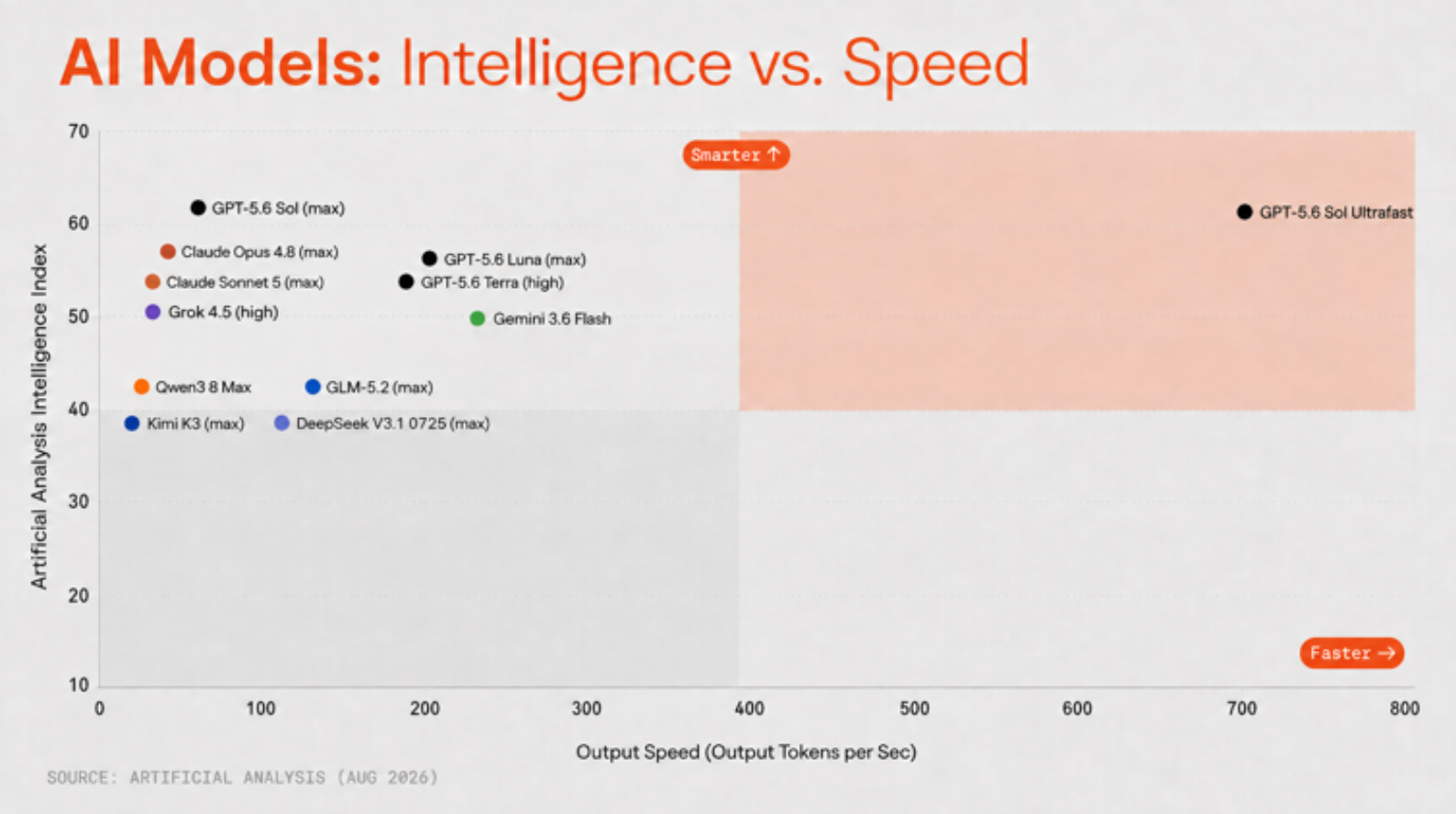
With Cerebras, GPT-5.6-Sol redefines the speed to intelligence Pareto frontier.
Why frontier-model inference is usually slow
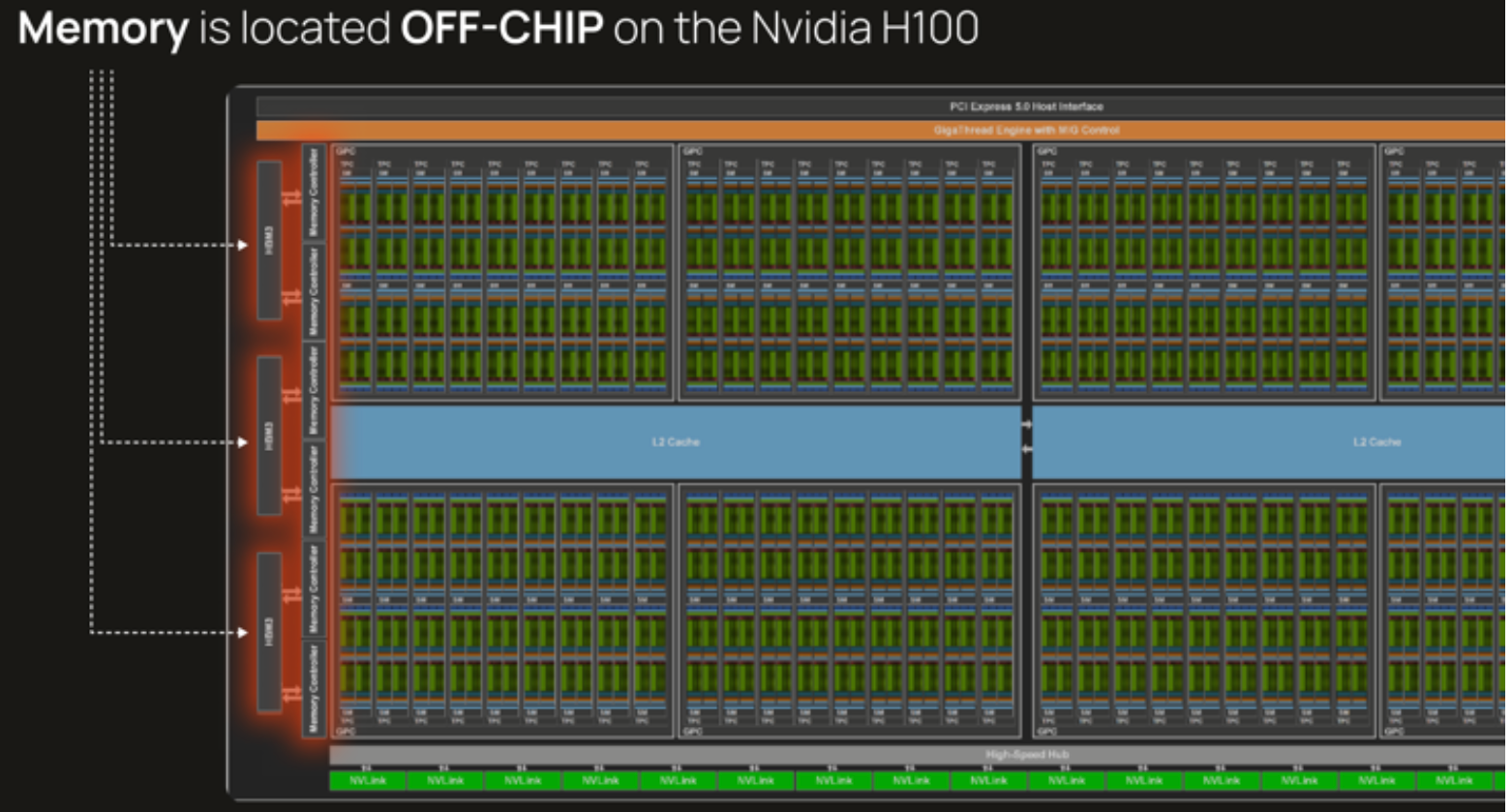
On a conventional GPU, the compute cores and the high-bandwidth memory that stores model weights are on separate chips. For each computation in inference, weights must cross that boundary to reach the compute over and over. As models grow, inference becomes constrained less by arithmetic and more by how quickly the system can move those weights.
This is the GPU memory wall.
Adding GPUs can increase throughput, but it does not automatically make a single response faster. Splitting a model across chips means every layer ends in a synchronization step, and each chip you add makes that step more expensive while shrinking the compute it was meant to accelerate. There's a crossover point where the interconnect wins and more hardware makes the model slower. Simply put: the computer spends too much time moving data.
Cerebras is built to solve this memory movement bottleneck: build a processor large enough to keep the modelʼs active weights next to the compute that uses them.
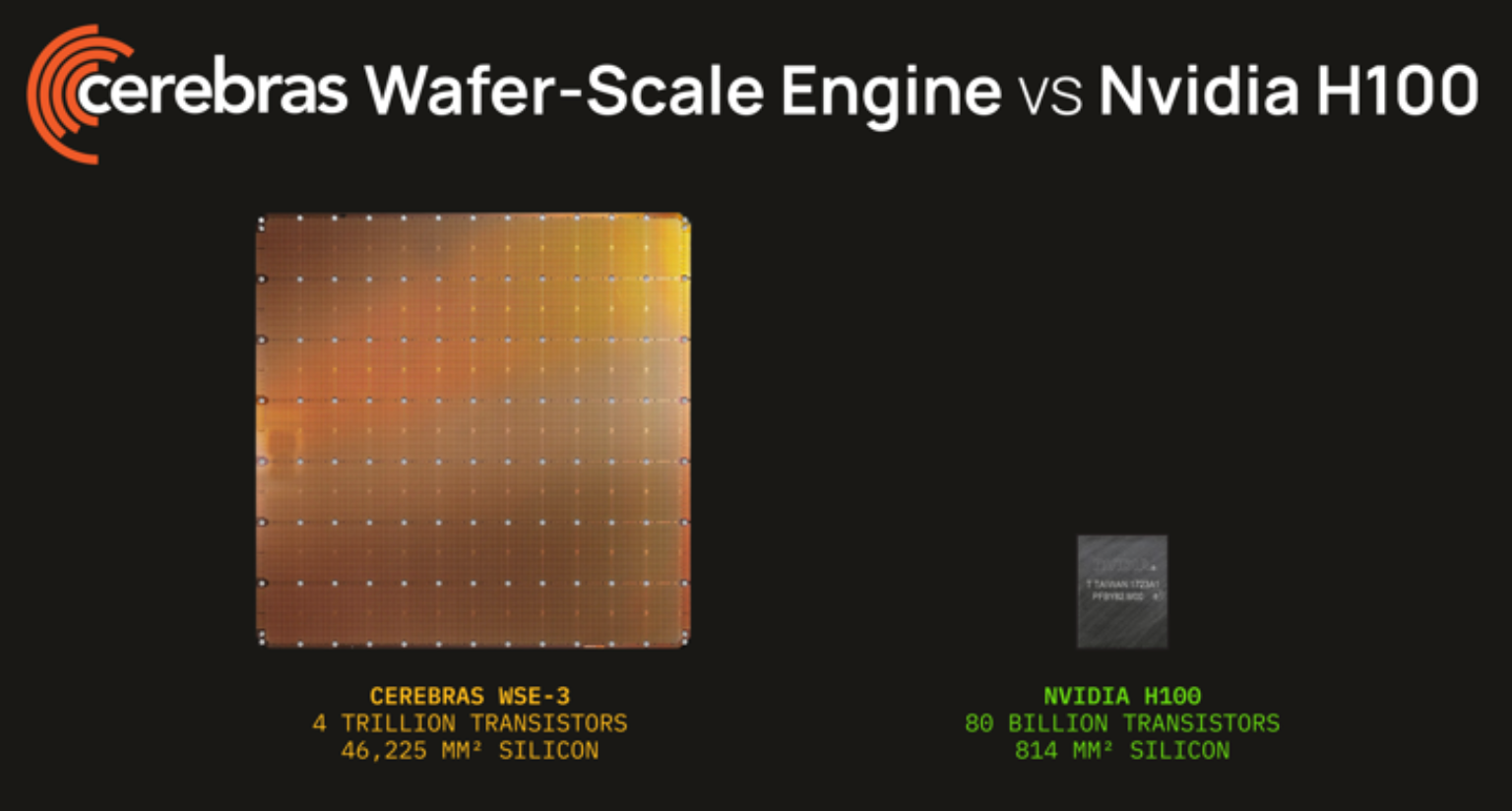
How Cerebras accelerates models, starting with an entire silicon wafer
A conventional chip is cut from a silicon wafer. Cerebras uses the wafer itself as the chip.
On conventional GPUs, model weights live in off-chip HBM and must cross into compute for every token. The WSE‑3 instead distributes 44 GB of SRAM across the wafer, directly beside its 900,000 cores. Together that memory delivers 21 petabytes per second of aggregate bandwidth, giving each core fast access to the weights it needs.
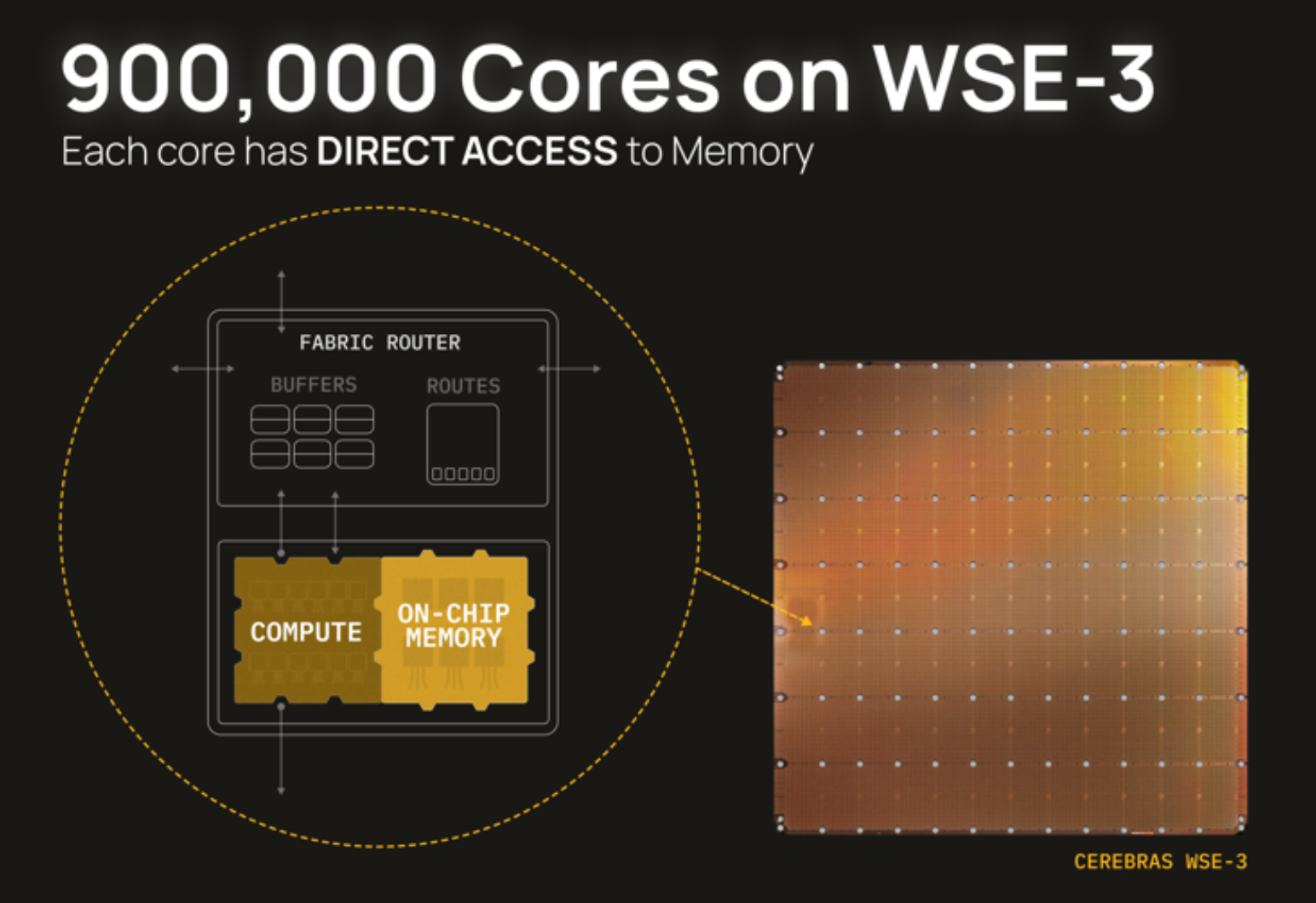
GPT‑5.6 Sol is too large for one accelerator, so Cerebras partitions it at layer boundaries across multiple CS‑3 systems. Each wafer keeps its assigned layers in local SRAM. For every token, the activation moves from one wafer to the next until the final stage emits the result.
This replaces much of the fine-grained sharding and synchronization required by conventional GPU clusters with a simpler path: weights stay close to compute, and only activations move between stages. Then the pipeline repeats, up to 750 times per second.
What up to 750 tokens per second means for you
Most people think of working with agents as providing some input and getting out some output.
But under the hood, the agents take many steps. It reads the task, reasons over the results, writes some code, tests its work, decides on the next step, and works in a loop until it is ready to yield its turn.
A complex task can involve multiple model requests and tool calls, so delays can add up across the workflow.
This means that per-token latency is not something you pay for once. It's a cost you pay at every step, multiplied by however many steps it takes to complete your task. And those steps add up quickly.
That multiplier is measurable, and it's larger than you might think. On a quality-matched sample of GDP‑Val tasks, including legal, financial, and engineering deliverables, GPT‑5.6 Sol Ultrafast completed the same tasks 5.6× faster than the same model on the standard endpoint.
On matched questions from Humanityʼs Last Exam, where inference dominates the workflow, Sol Ultrafast completed successful work 6.9× faster. With that kind of speed, an hour long task can be completed in just under nine minutes.
For Developers
Nowhere is the Cerebras speed more visible than in coding. It is not uncommon for developers to set agents off to work for hours, or even days. Whether youʼre running loops or long-running agents, Sol on Cerebras is an experience unmatched. Frontier level intelligence served at blistering speed allows you to build, test, and iterate on ideas faster than ever before.
For Knowledge Workers
Knowledge work has more human in the loop. But it is still a loop. A significant portion of the workflow is reading and deciding, evaluating outputs, and creating deliverables. All the while, a human is just waiting. Up to 750 tokens-per-second allows for significantly faster iteration, allowing for more work in less time, whether youʼre drafting emails, taking care of taxes, or editing videos.
Computer Use & Automation
One of the most popular new use cases for agents are the ability for the models, with your permission, to be able to use your machine or browser in the background while you work. This empowers you to create powerful automations, delegating tasks you can describe directly to your agents, all without taking over your machine while you're focused on more important tasks.
Faster inference benefits computer-use workloads by reducing the delay between observing an interface, deciding what to do, and taking the next action.
Separately, Cerebras serves leading open models at thousands of tokens per second on its public endpoints:
- OpenAI GPT OSS 120B at 3,000 tok/s
- Gemma 4 31B at 1,850 tok/s
- Z.ai GLM 4.7 at 1,000 tok/s
For dedicated enterprise endpoints, Cerebras also supports Kimi K2.6, GLM 5.1, MiniMax M2.5, Qwen3 Coder 480B, Llama 4 Maverick, Mistral Large 3, DeepSeek V3.2, and many additional model families.